
Table of Contents:
- Introduction: The Role of 5G in Mining
- Faster Connectivity for Remote Operations
- Enhanced Worker Safety with 5G
- Real-Time Data Collection and Analytics
- Enabling Autonomous Equipment with 5G
- Remote Control of Machinery and Operations
- Reducing Environmental Impact Through Efficiency
- Challenges and Considerations in 5G Adoption
- The Future of 5G in Mining
- FAQs
Introduction: The Role of 5G in Mining
The mining industry has seen technological advancements over the years, but the arrival of 5G promises to be a game-changer. 5G technology, with its ultra-fast speeds, low latency, and increased bandwidth, is pushing the boundaries of what’s possible in mining operations. The need for seamless connectivity in remote mining sites, faster data transmission, and automation in operations is growing, and 5G provides solutions to these challenges.
As mining companies strive for greater efficiency, improved safety, and sustainability, 5G emerges as a vital tool in achieving these goals. This article will explore the key ways 5G is impacting the mining sector and its future role in revolutionizing the industry.
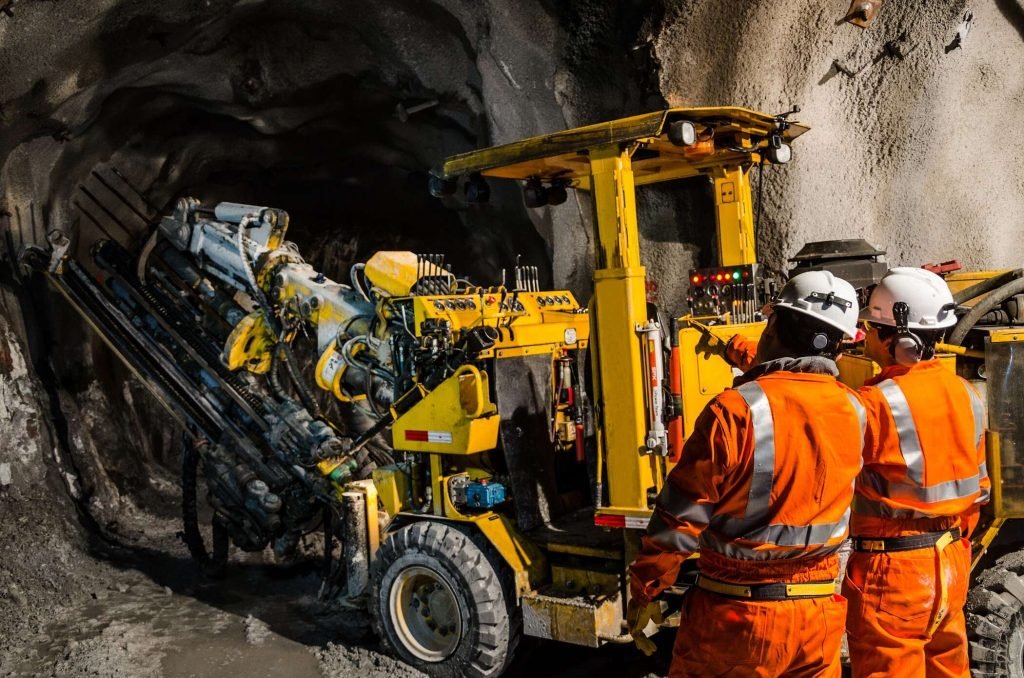
1. Faster Connectivity for Remote Operations
Mining operations often take place in extremely remote areas where traditional communication infrastructures, such as 4G or satellite communications, either struggle with limited bandwidth or are simply not viable. 5G technology, with its ability to provide ultra-fast, low-latency connectivity, is addressing these challenges head-on.
Benefits of 5G Connectivity in Remote Mining:
- Reliable Communication: One of the critical issues in remote mining is the lack of reliable communication. With 5G networks, mining companies can ensure uninterrupted communication between their control centers and on-site mining operations. This means that even in the most isolated locations, mining operations can stay fully connected, allowing for efficient management and coordination.
- Reduced Latency: With 5G’s ultra-low latency, data can be transmitted almost instantaneously, allowing real-time monitoring and faster decision-making. This can significantly enhance productivity and reduce risks, as operators can respond to on-site situations in real-time. It also enables the smooth functioning of autonomous vehicles and machinery that require split-second decision-making capabilities.
- Operational Efficiency: Faster data sharing and seamless communication streamline the entire operational process. By minimizing downtime due to communication delays, 5G helps mining companies to improve their overall operational efficiency. Tasks like remote monitoring, equipment control, and decision-making can be done with greater precision and at a faster pace.
Real-world example: In Finland, Nokia and Outotec partnered to create 5G-connected mines, enabling real-time remote control of heavy machinery. This partnership allows for remote-controlled operations that boost efficiency and safety, showcasing how 5G technology can unlock new possibilities in mining.
Learn more from Nokia’s Mining Solutions.
2. Enhanced Worker Safety with 5G
Safety remains a core concern in the mining industry, where hazardous environments and equipment pose constant risks to workers. 5G technology enhances safety protocols by enabling advanced, real-time safety systems that ensure the well-being of workers and the safe functioning of equipment.
Key Safety Innovations with 5G:
- Wearable Devices: 5G enables workers to wear smart, connected devices that monitor vital health statistics such as heart rate, body temperature, and fatigue levels. These wearables can alert a central control room in real time if a worker is experiencing fatigue, elevated heart rate, or other dangerous symptoms, allowing for immediate intervention. This technology helps prevent accidents caused by overexertion or unsafe working conditions.
- Connected Cameras: High-resolution 5G-enabled cameras can be strategically placed in hazardous areas of mining sites, allowing constant, real-time monitoring. These cameras can be integrated with AI-powered tools to detect anomalies, unsafe practices, or machine malfunctions and notify operators before accidents occur.
- Remote Diagnostics: With the power of 5G, AI-powered tools can diagnose equipment malfunctions or dangerous operating conditions early on, enabling mining companies to act before breakdowns or accidents occur. This predictive capability reduces the risks associated with heavy machinery failures, keeping both workers and operations safe.
Real-world example: In South Africa, 5G-enabled wearable devices are being used to monitor workers’ fatigue, heart rates, and locations, ensuring prompt responses to potential hazards and improving overall worker safety. These wearables have significantly reduced accidents, demonstrating the power of 5G in proactive safety management.
Learn more from Ericsson’s Role in Mining Safety.
3. Real-Time Data Collection and Analytics
In mining, timely and accurate data collection is critical for optimizing operations, improving safety, and managing resources efficiently. 5G plays a pivotal role in enabling real-time data collection and transmission, which leads to better decision-making across all facets of the mining operation.
Benefits of Real-Time Data in Mining:
- Improved Decision-Making: With 5G, mining companies can access real-time data from sensors, machinery, and equipment located across the mine. This data provides actionable insights that allow decision-makers to react instantly to changing conditions on the ground, improving production processes and enhancing safety protocols.
- Increased Productivity: By collecting data from connected sensors and machinery, mining companies can implement predictive maintenance strategies. These strategies identify potential equipment failures before they happen, minimizing downtime and increasing operational uptime. This improves productivity by ensuring that machinery operates at optimal capacity with fewer disruptions.
- Optimized Resource Extraction: Sensors connected to 5G networks can provide detailed data about mineral extraction, allowing operators to fine-tune processes and reduce waste. The precise control enabled by real-time data helps mining companies extract more resources with less environmental impact, contributing to greater sustainability.
Real-world example: At BHP, one of the world’s largest mining companies, 5G technology is used to facilitate real-time data transmission from their remote mining sites. This allows BHP to optimize the use of machinery, reducing downtime and improving the overall efficiency of resource extraction.
Read more from BHP’s Digital Operations.
4. Enabling Autonomous Equipment with 5G
Autonomous equipment is transforming the mining industry by reducing human intervention, improving safety, and increasing operational efficiency. With 5G technology, these machines can communicate seamlessly, making autonomous operations faster, more precise, and far more reliable.
5G-Driven Autonomy:
- Real-time Control: One of the main advantages of 5G is its ultra-low latency, which enables near-instant communication between control centers and autonomous mining equipment. In mining, this means that trucks, drills, and loaders can be controlled remotely or even operate autonomously with immediate feedback from the control room. For example, if a problem arises with a machine, the control center can respond in real-time, optimizing performance and preventing accidents.
- Efficient Operations: Autonomous equipment can operate in hazardous environments such as underground mines or areas with extreme temperatures without putting human lives at risk. These machines are equipped with sensors that collect data on their surroundings, allowing them to navigate difficult terrain and avoid obstacles. The real-time data transmission facilitated by 5G ensures that these machines can operate continuously, even in the harshest conditions, without human intervention.
- Cost Savings: With autonomous equipment, mining companies can reduce labor costs by relying less on human operators. Additionally, autonomous machinery operates with higher precision and consistency, which improves productivity and lowers operational costs. Automation also reduces human error, which can lead to costly mistakes or accidents. Over time, this results in substantial cost savings.
Real-world example: In Australia, Rio Tinto has integrated 5G-enabled autonomous trucks into their operations in the Pilbara region. These trucks are capable of transporting iron ore across the mine without the need for human drivers. By leveraging 5G technology, Rio Tinto has seen significant improvements in safety and operational efficiency, reducing costs and enhancing the productivity of its mining operations.
Discover more about Rio Tinto’s Autonomous Fleet.
5. Remote Control of Machinery and Operations
5G technology makes it possible to remotely control heavy mining machinery, even from thousands of miles away. This capability is a game-changer for mining companies, particularly in dangerous or remote locations, where sending human operators may pose safety risks or operational challenges.
Advantages of Remote-Controlled Machinery:
- Reduced Risks: One of the most significant benefits of remote control is the ability to keep human workers away from hazardous environments. Whether it’s underground mining or operations in areas with extreme weather conditions, 5G enables workers to operate machinery from safe, distant locations, reducing the likelihood of accidents and injuries.
- Faster Response Times: In traditional mining operations, it can take time for workers to respond to issues, especially in remote areas. With 5G-powered remote control, operators can adjust and manage machines in real-time, leading to immediate adjustments and optimized operational efficiency. This real-time control minimizes delays, maximizes productivity, and reduces downtime, as machines can be operated continuously without interruption.
- Increased Precision: 5G’s high bandwidth and low latency allow operators to use high-resolution video feeds and advanced sensors to control machinery with pinpoint accuracy. This enhanced precision reduces material wastage, optimizes resource extraction, and ensures that machinery is used efficiently.
Real-world example: Komatsu has developed a 5G-powered mining system in Chile that allows operators to control excavators and haulage trucks remotely. By implementing this system, Komatsu has improved operational safety and increased the productivity of its mining operations by allowing machines to operate continuously without human intervention.
Explore more from Komatsu’s Innovations.
6. Reducing Environmental Impact Through Efficiency
Mining operations have historically had a significant environmental impact, contributing to deforestation, water pollution, and greenhouse gas emissions. 5G technology, however, provides solutions to reduce this impact by optimizing resource use, improving energy efficiency, and enabling real-time monitoring of environmental factors.
Environmental Benefits of 5G in Mining:
- Energy Efficiency: One of the key advantages of AI-powered 5G systems is their ability to optimize energy use. Machines and equipment connected via 5G can operate at peak efficiency, reducing unnecessary energy consumption. For example, AI systems can adjust the power usage of machinery based on real-time data, ensuring that only the required amount of energy is used, which helps reduce waste.
- Minimizing Carbon Footprint: 5G-enabled data collection allows mining companies to monitor emissions in real-time and adjust their operations to lower carbon emissions. Operators can use the data to reduce machinery idling, optimize transportation routes for fuel efficiency, and control energy usage in extraction processes, all of which contribute to reducing the mine’s overall carbon footprint.
- Water Usage Optimization: Water usage is a critical concern in mining, particularly in areas where water resources are scarce. 5G-powered sensors can monitor water consumption in real-time, identifying areas where water is being overused or wasted. By collecting this data, mining companies can implement strategies to reduce water usage and recycle wastewater, ensuring a more sustainable approach to resource management.
Real-world example: At its mines in Brazil, Vale has implemented 5G-connected smart sensors to monitor and reduce the environmental impact of its operations. These sensors track emissions, water usage, and energy consumption, providing valuable data that allows Vale to improve its sustainability initiatives and reduce its environmental footprint.
Learn more about Vale’s Sustainability Initiatives.
7. Challenges and Considerations in 5G Adoption
While the benefits of 5G are clear, the mining industry also faces several challenges when it comes to adopting this advanced technology. These challenges must be addressed for the full potential of 5G to be realized in mining operations.
Key Challenges:
- Infrastructure Costs: One of the primary hurdles in implementing 5G is the high cost of infrastructure. Building a 5G network in a remote mining location requires significant investment in hardware, network infrastructure, and ongoing maintenance. These costs can be prohibitive, particularly for smaller mining companies with limited resources. Furthermore, the harsh environmental conditions at mining sites may increase the cost of building and maintaining 5G infrastructure.
- Training Needs: As 5G introduces new technologies and operational methods, there is a growing need for specialized training. Workers need to be trained on how to use 5G-enabled systems, including autonomous machinery, data analytics tools, and remote-control interfaces. Without adequate training, companies may struggle to get the most out of their 5G investments.
- Integration with Legacy Systems: Many mining companies still use older equipment and legacy systems that may not be compatible with 5G technology. Upgrading these systems or integrating them with 5G networks can be complex, time-consuming, and costly. Mining companies need to evaluate whether it’s worth the investment to upgrade or replace older equipment, considering the long-term benefits of 5G technology.
Real-world example: Despite the immense potential of 5G, Teck Resources, a leading Canadian mining company, faced significant delays in deploying 5G technology due to the high setup costs and difficulties in integrating new systems with their existing operations. This highlights the challenges that many mining companies may face as they transition to 5G.
Read more from Teck’s Challenges.
8. The Future of 5G in Mining
As 5G continues to evolve, its potential applications in mining will only grow. The future of 5G in mining promises fully autonomous mining sites, advanced AI-powered analytics, and further improvements in safety and sustainability.
Future Trends:
- Fully Autonomous Mines: With the combination of 5G, AI, and machine learning, mining companies are moving toward fully autonomous mining sites. In these futuristic operations, all heavy machinery, from trucks to drills, will be controlled autonomously via 5G networks, minimizing human involvement and further reducing safety risks.
- AI-Powered Analytics: The future of 5G in mining will also see more sophisticated data analysis powered by AI. These analytics will enable predictive operations, allowing mining companies to forecast equipment failures, optimize resource extraction, and improve operational efficiency based on real-time data.
- Increased Safety Measures: With continuous improvements in real-time monitoring, data analytics, and remote control, worker safety will further improve. Companies will be able to predict potential hazards before they occur, allowing for proactive safety measures to be taken.
Real-world example: Anglo American is at the forefront of using 5G technology in mining, particularly in its platinum operations in South Africa. Anglo American aims to achieve fully autonomous mining within the next decade, demonstrating the transformative potential of 5G in future mining operations.
Learn about Anglo American’s Vision.
FAQ Section
- How is 5G different from previous technologies used in mining?
5G offers faster speeds, lower latency, and higher bandwidth, allowing real-time data transmission and remote control of machinery, unlike 4G or traditional satellite communications. - What is the biggest advantage of 5G in mining?
The biggest advantage of 5G in mining is its ability to enable real-time data collection, allowing for better decision-making, automation, and safety improvements. - Are there environmental benefits to using 5G in mining?
Yes, 5G helps mining companies reduce energy consumption and waste, optimize machinery use, and track environmental data in real-time, lowering the industry’s carbon footprint. - What are the main challenges of implementing 5G in remote mining locations?
The main challenges include the high costs of installing 5G infrastructure in remote areas, integration with existing systems, and training the workforce to use the new technology. - Will 5G lead to job losses in mining due to automation?
While 5G will enable more automation, it will also create new jobs that require higher levels of technical expertise, such as system management and data analysis.
Conclusion
The impact of 5G on the mining industry is profound. From enhancing safety and operational efficiency to reducing environmental impact, 5G is driving a new era of innovation. As mining companies continue to adopt 5G technologies, we can expect a more connected, automated, and sustainable future for the industry.
By staying ahead of these trends, mining companies can not only increase their competitiveness but also ensure that their operations are safer and more sustainable for future generations.
As the mining industry continues to evolve with advancements in technology like AI, 5G, and blockchain, the path forward becomes clearer: greater transparency, efficiency, and sustainability are no longer optional, but essential. By adopting these innovations, mining companies are not only staying competitive but also ensuring they meet global standards for responsible sourcing and environmental stewardship.
To explore these dynamic shifts further, check out these insightful articles:
- 7 Strategic Insights into Metal Ore Mining Economics
- 5 Powerful Trade Policies Shaping the Metal Ore Market
- Developing Countries: 7 Insights on Chromite Mining
- 5 Strategies for International Metal Trade Market
- 5 Strategic Opportunities in the Metal Ore Industry
- Currency Fluctuations and Their Impact on Metal Ore Prices
- 7 Key Risk Management Strategies for Metal Ore Trading
- 10 Ways AI in Mining Revolutionizes the Industry
- 7 Game-Changing Ways Blockchain Brings Transparency to Mining
For updates and continued discussions, follow us on LinkedIn and Medium. Together, we can build a future that aligns technological progress with ethical and sustainable practices.
